
Programs
Where Science Meets Human Potential
The success of gene therapy depends on delivering the right genetic payload to the right cells. Beginning with hearing loss, Skylark Bio is advancing a precision delivery platform engineered to target disease-relevant cell populations, with the goal of restoring essential biological function through a single treatment.

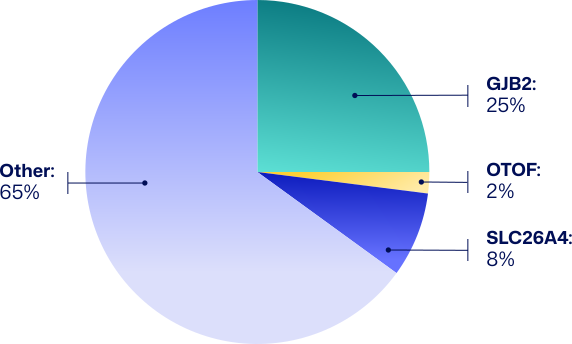
Prevalence of Autosomal Recessive Hearing Loss1
The Problem
Today’s Treatments Fall Short of Natural Hearing
- Hearing loss affects 3 to 4 out of every 1,000 children; genetic factors contribute to nearly 50% of cases.2
- Most inherited hearing loss is autosomal recessive, meaning a child inherits an altered copy of the same gene from each parent. Although the parents are typically unaffected carriers with normal hearing, their child may develop hearing loss.
GJB2-related hearing loss (also known as Connexin 26 hearing loss) is the most common genetic cause of deafness worldwide. SLC26A4-related hearing loss is another leading hereditary cause of hearing impairment. Despite the high prevalence, there are currently no approved disease-modifying therapies available. This highlights a substantial unmet medical need and underscores the importance of developing effective treatments that address the underlying genetic causes of hearing loss.
Without effective treatment, hearing loss can profoundly impact a child's speech and language development, academic achievement, social interactions, and self-esteem. These challenges may contribute to social isolation and reduced educational attainment, potentially limiting future opportunities.
While hearing aids and cochlear implants help patients access sound, they do not address the underlying cause of disease, cannot fully restore natural hearing, and require lifelong dependance and maintenance.
- Sloan-Heggen, C.M., Bierer, A.O., Shearer, A.E. et al. Comprehensive genetic testing in the clinical evaluation of 1119 patients with hearing loss. Hum Genet 135, 441–450 (2016). https://doi.org/10.1007/s00439-016-1648-8
- Because hearing loss is highly heterogeneous across different populations around the world, its causes and characteristics vary by region.
Compensating for hearing loss isn’t enough.
The Solution
Designed to Go Beyond Compensation
Skylark Bio’s locally delivered gene therapies are designed to restore the biological pathways that enable hearing, communication, connection, and engagement with the world.
For genetic hearing loss, our engineered therapies target the specific cochlear cells responsible for auditory function, with the goal of restoring hearing at its source.
- Enables precise, localized delivery to the inner ear
- Targets gene-specific cochlear cell populations critical for hearing
- Designed to provide durable benefit from a single treatment


Impact and Validation
Delivering Meaningful Impact
Addressing a substantial unmet need
Disabling hearing loss affects hundreds of millions of people worldwide, many of whom have genetically driven disease and limited therapeutic options.
Leveraging a validated approach
Building on the clinical validation of inner-ear gene delivery, with a lead program advancing through Phase 1/2 clinical development.
Designed to scale
Beginning with well-defined genetic hearing loss indications and establishing a foundation for expansion into a broader range of single-gene disorders.
Pipeline
A Focused Pipeline. Built to Scale.
Our gene therapy pipeline is focused on addressing single-gene disorders, beginning with genetic hearing loss.
By combining precise local delivery with targeted access to disease-relevant cells, our platform establishes a foundation for durable genetic medicines across hearing loss and other genetically defined disorders.
